Honey hunting to beekeeping: The story of Hawa Ibrahim, the best beekeeper in Kwahu Afram Plains
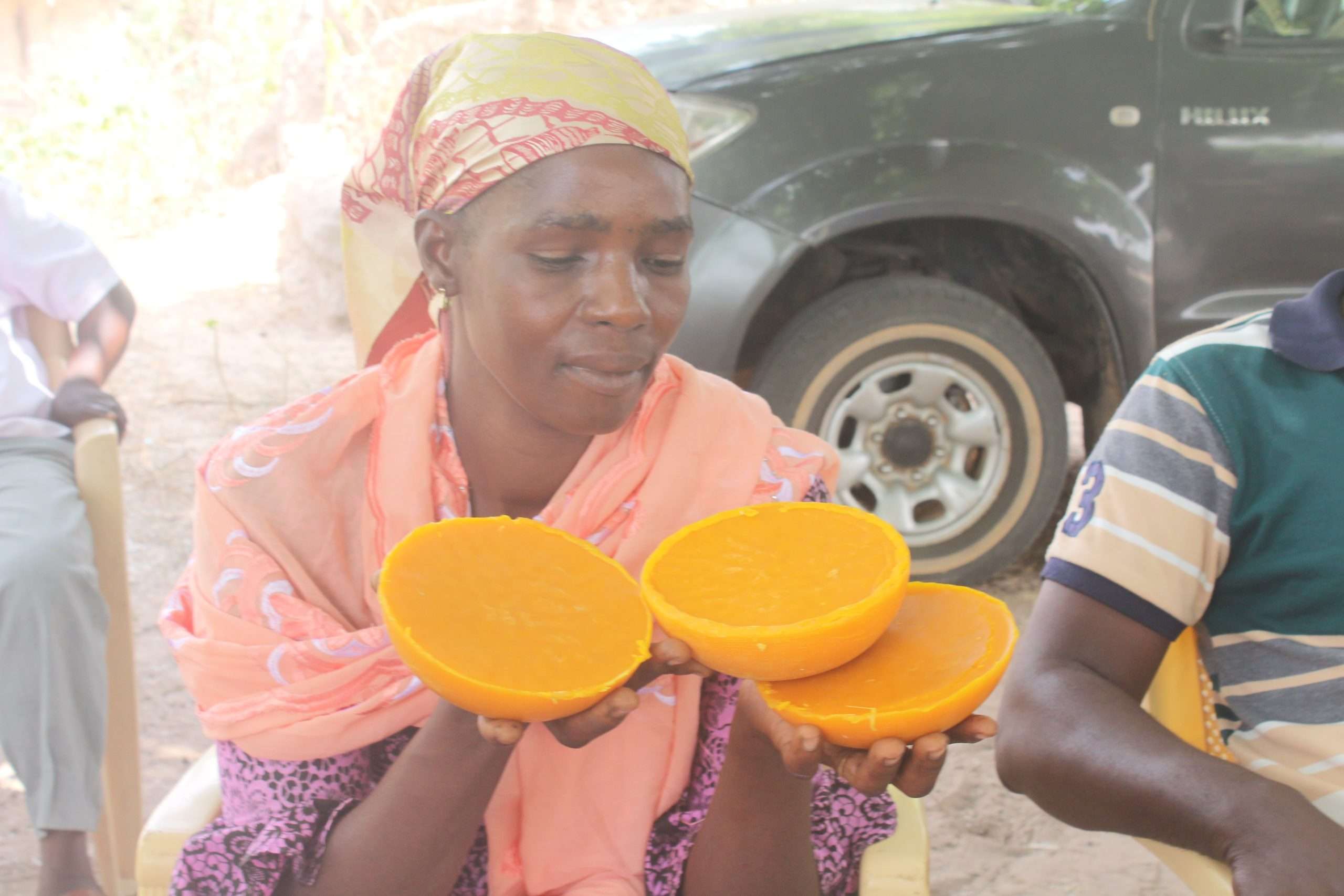
Hawa Ibrahim, a 52-year beekeeper who used to engage in honey hunting with her husband, lives in a small village [Kojorbator] on the fringe.
Kojorbator inhabits only five households including Hawa’s and is a remote island mostly accessible by boat, canoe, or by foot, with a poor road network. Hawa lives there with her husband and one [youngest] of her six kids – the other children are in Hohoe and Donkorkrom schooling.
For decades, Hawa and many people living on the fringes of Park have been forced by poverty to exploit the reserve’s resources, especially engaging in honey and game hunting. Of course, this is against the law creating conflict with Wildlife officials in the area.
Honey trading has been a lucrative business for many people in the area for decades. People living on the fringes of Park clearly have access to rich natural resources such as honey bees and forests.
The people are familiar with bees, and the area is suitable for beekeeping but there is no tradition of keeping bees using beehives because they lacked knowledge, experience, and means to begin.
Conversion from honey hunting to sustainable beekeeping
In February 2019, Bees for Development Ghana (BfDG) was invited by a beekeeper, Gideon Zege [now works with BfDG as field officer], who operates near the part to visit Kwahu Afram Plains North with the objective of interacting with the multitude of honey hunters and other interest groups and see how best BfDG can help them – hence a beekeeping project was birthed.
Hawa together with other people from neigbouring villages met BfdG at Apesika – a village which is about 4 km from Kojorbator [Hawa’s village].
Insert photo
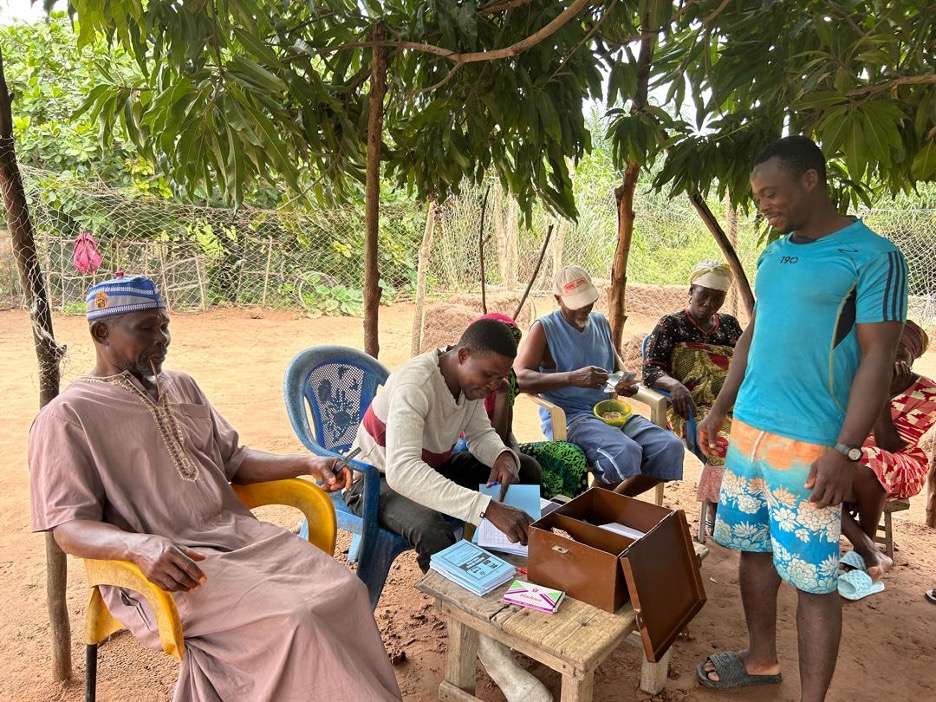
Community consultation in Apesika, February 2019
When BfdG asked community members what they expected from a beekeeping project, their initial response was that they expected to be given beehives – as they could not afford to buy them.
However, later, the people admitted, “even if we had hives – then what? We do not know how to use them. We need knowledge and skills”.
BfDG then proposed the idea of teaching Hawa and her colleagues how to make simple, fixed-comb beehives and eventually offered to teach them how to make the hives, manage the bees, and harvest and sell honey as well as beeswax.
Hawa was engaged one-on-one by BfDG officials after the community meeting. Interesting, isn’t it? As if they knew Hawa would be a great beekeeper in the future.
During the interaction with Hawa, she said “I have six children. There are no secondary schools here in the village so four of my children are staying with relatives in town to go to school. I have to send money to pay for their upkeep. It is a constant struggle to keep them in school. I want to keep bees to get money to support them”.
The community members highly welcomed the beekeeping project proposed by BfDG leading a training workshop in May 2019. The workshop was highly attended because people were already familiar with bees, and they were made to understand that the area is suitable for beekeeping.
Also, partly because the people knew the revenue from honey hunting [tedious activity] and small-scale farming was meagre, and they suffer from chronic poverty, live in poor housing, and inability to pay school fees when they have to send their children out of the villages [without schools] to schools in periurban communities.
The ambition of converting honey hunters to practicing beekeepers was christened with BfdG providing a field officer [Gideon] who visits the various communities for follow-ups and ‘on-the-job’ advice and also assists them when necessary on a regular basis.
Months after the workshop BfDG project coordinator visited Hawa and her colleagues to monitor their progress since the training. When Hawa was asked why did she decide to start beekeeping?
She said, “This beekeeping work, ermm … what makes me so glad is that I had that idea in my mind but I had no knowledge on how to start it. By God’s grace, you brought the knowledge I needed … so that motivated me. Also, the training and the knowledge you brought to us gave me the zeal to start what [beekeeping] has always been in my heart.”
Hawa was asked why beekeeping and not something else and her response was that “As I said earlier, it is something that is on my heart. I am very interested in beekeeping because I know the value of honey … people that used to go honey hunting get a lot of money and bees are all over. The farming we do here is sometimes good and other times bad; so it is not reliable.”
“I started immediately after the workshop on beekeeping and hive making last year. I started looking for Borassus after the first day of the workshop and made some log hives on my own even before group one started. I currently have 24 hives and 11 of them have colonies in them … I am so happy.” Hawa speaking in February 2020.
She added “I learnt how to make hives from the locally available material like Borassus and palm fronds. I also learnt how to bait the hives, how to select an apiary, how to set up the hives in the apiary, and many other things during the BfdG workshop.”
Having foresight and exhibiting a perseverance attitude, Hawa said “So far, I would say I have not gained any tangible thing from beekeeping yet but I know I will definitely get something from it very soon. However, I am building on the knowledge I received from the workshop so I would say I have gained knowledge.”
Hawa was also asked her opinion on beekeeping compared to honey hunting and this is what she said “comparing the two, … me for instance, I cannot go for honey hunting … though I wish I could do that. I do not have that kind of strength to go to the forest. As for the beekeeping, I am so happy that through the project, we have the opportunity to engage in such activity and here I am keeping bees myself.”
Since 2020, Hawa has been working hard to increase the number of hives and colony numbers. She has been harvesting and selling honey as well. Currently, she has 200 hives and 37 colonies, and her recent harvest in November 2021 got her 5 jelly cans of honey.
In December 2021, Hawa Ibrahim’s hard work paid off, winning the Best Beekeeper in the Kwahu Afram Plains District. As a beneficiary of Bees for Development Ghana’s project, she indicated during the award ceremony that, she was initially skeptical about leaving their traditional way of honey hunting, which was a major source of income.
But upon reflection and seeing the prospects, she decided to fully engage herself in this sustainable method of keeping bees. She believes that’s the way to come out of poverty and also to provide a bright future for her children. She added she had tried her hands on so many livelihood activities, but none can be compared to beekeeping.
Hawa, further stressed, the training she received from BfdG is the source of her success story today.
Hawa had a message for fellow women in Ghana during the National Farmers’ Day award ceremony. She advised her fellow women in rural areas to also engage in beekeeping to earn a good living in order to support their families.
“There is no work that women cannot do … so don’t say I can only do this, but I can’t do that, so if you decide that you want to do it you can indeed do it and reap the benefit from it,” she said.
Other Stories
News
Empowering Beekeepers Through Financial Literacy in the Kwahu Afram Plains
Since 2019, we have been transforming rural livelihoods in the Kwahu Afram Plains through its sustainable beekeeping initiative. Beyond producing honey, this approach empowers communities to restore forests, build income resilience, and improve well-being. Through our hands-on training, participants learn about bee behaviour, hive construction using locally available materials, apiary establishment and management, forest conservation, and […]
Read Story →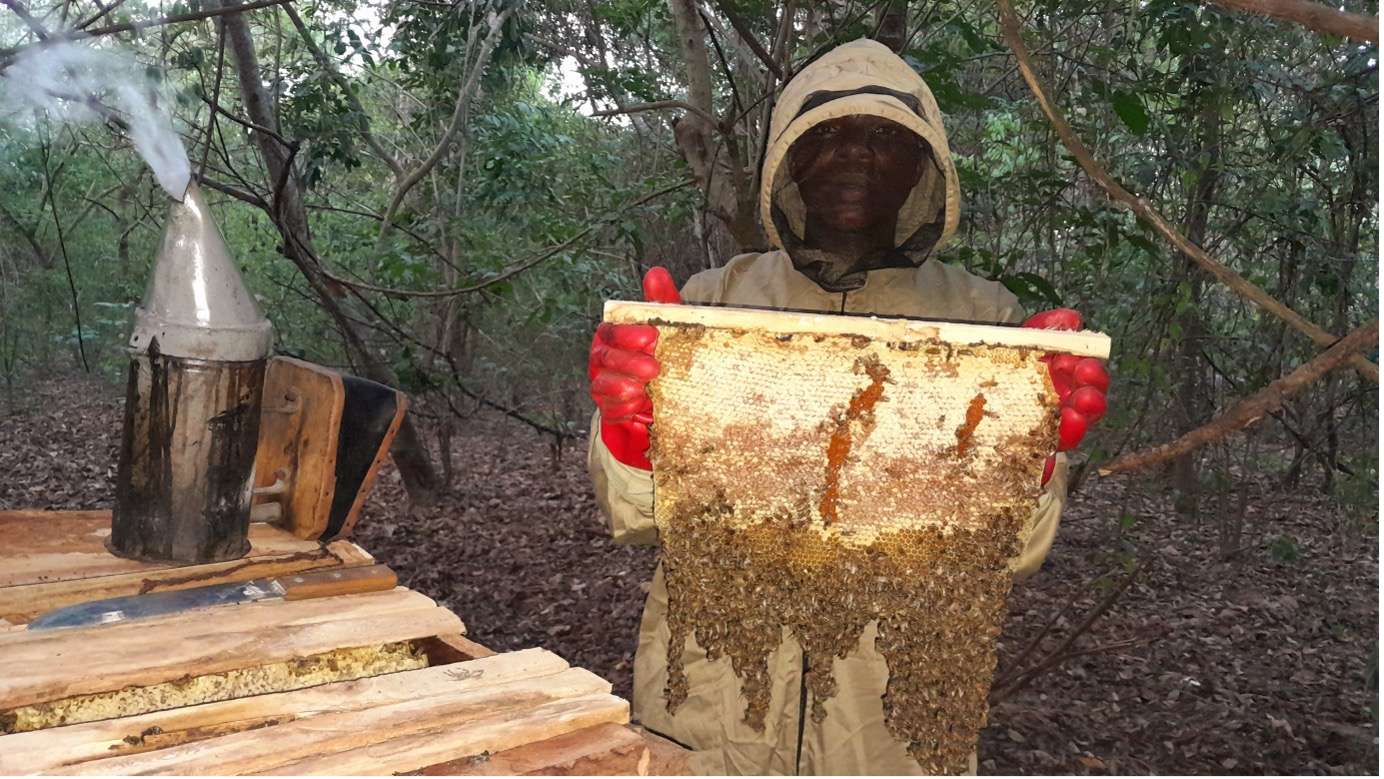
News
Beekeeping Income Inspires Others to Start Beekeeping in Kwahu Afram Plains
In the heart of the Kwahu Afram Plains, a quiet revolution is taking place—one hive at a time. For Felix Agbalenyo, a young resident of Kofinyina near Donkorkrom, the decision to start beekeeping has not only changed his life but is also inspiring others across the area to follow suit. Felix, who earns a living […]
Read Story →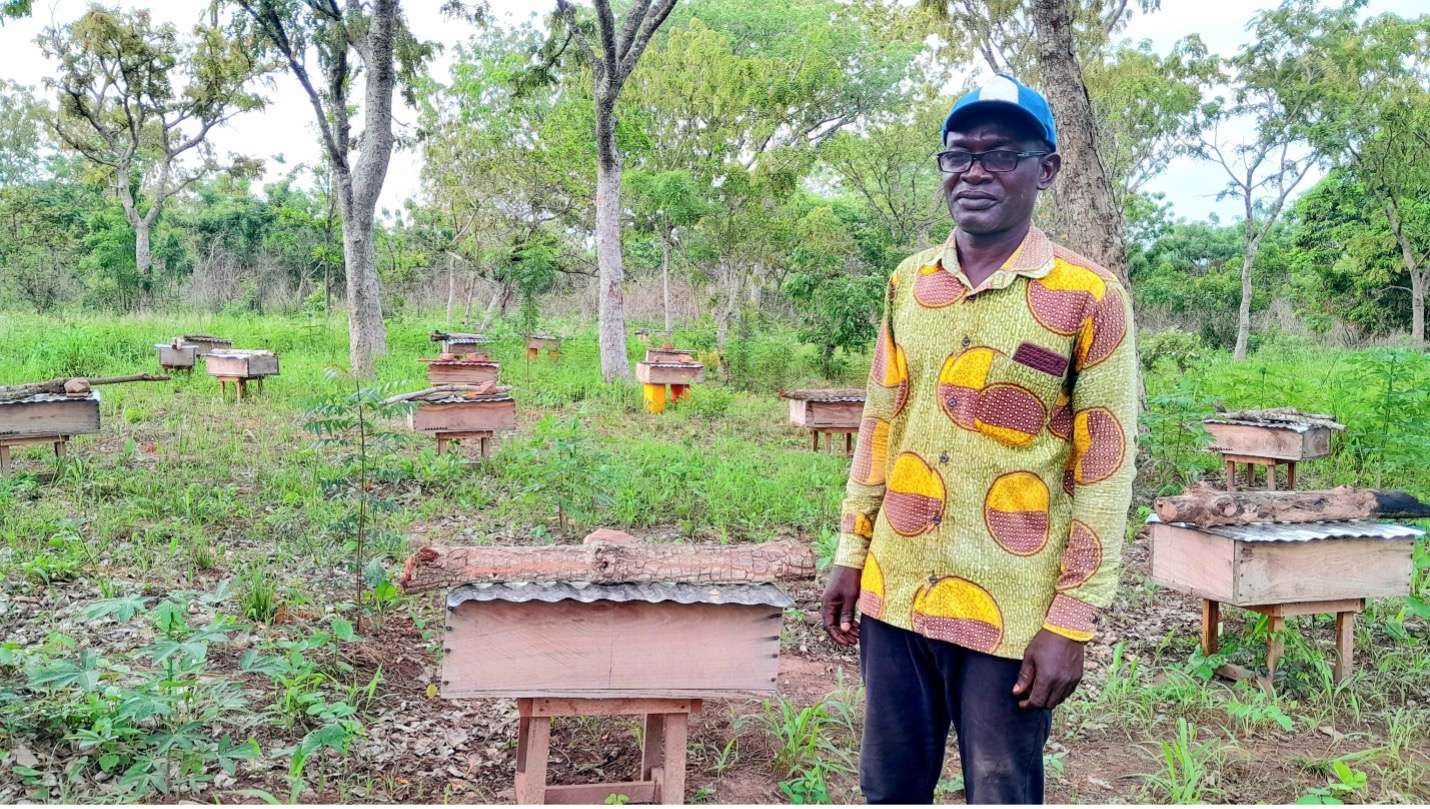
News
The Buzz Club Ghana Project: Inspiring Young Beekeepers and Conserving Biodiversity
Since 2015, Bees for Development Ghana has been implementing the Buzz Club Ghana Project, a unique initiative that empowers schoolchildren, teachers, and communities with knowledge and skills in beekeeping, pollination, and biodiversity conservation. Originally, the project aimed to support pupils in furthering their education in Senior High School and protecting the environment through beekeeping. However, […]
Read Story →