Bee-led conservation: How beekeeping, honey-trade and fire mitigation drive forest recovery in Afram Plains
The forests of Kwahu Afram Plains in the east of Ghana, are suffering from unsustainable exploitation, lack of management and destructive dry season fires. People here can point to useful and valuable tree species which used to be abundant and are now hard to find, such as Ceiba pentandra, Khaya ivorensis and Milicia excelsa. The […]
The forests of Kwahu Afram Plains in the east of Ghana, are suffering from unsustainable exploitation, lack of management and destructive dry season fires. People here can point to useful and valuable tree species which used to be abundant and are now hard to find, such as Ceiba pentandra, Khaya ivorensis and Milicia excelsa.
The fruit of Parkia biglobosa or the African locust bean is a source of food and medicine and is in decline. Being lake-side communities, people notice the loss of Momordica charantia, or wild bitter melon, which used to be widely used for making fish traps.
The people in this hard-to-reach part of Ghana have limited access to employment and livelihood opportunities making their reliance on natural resources particularly acute. The poverty metrics of these communities are some of the lowest in Ghana.
Beekeeper with her 10 new hives made from income from selling honey
Yet within the forests lies a golden opportunity. Despite the degradation, the forests support a healthy honey bee population and good floral resources from trees, shrubs, and herbs. Until recently the only people to benefit from bees were honey hunters – people who plunder wild nests.
Following a plea from local communities Bees for Development Ghana started to provide beekeeping training, with a focus on turning honey hunters into nature-based beekeepers, and making beekeeping accessible for women. Yet it was the support from the Darwin Initiative which enabled us to take our intervention to scale and complete the ‘virtuous circle’ between people, bees and biodiversity.
Aremeyaw Awudu a nature-based beekeeper in his protected apiary at Apesika
People told us that having a reliable and rewarding route to market was key. So instead of focussing on production first and thinking about selling as an afterthought we invested in a social enterprise and built a Honey and Beeswax Processing Centre in the town of Donkorkrom.
Being able to sell honey for cash instantly transforms bees and beehives into economic assets, so incentivising beekeepers to maintain the forests where their hives are located. It is this logic which goes to the heart of our Darwin-funded project ‘Beekeepers Restore Forests’. And it is working.
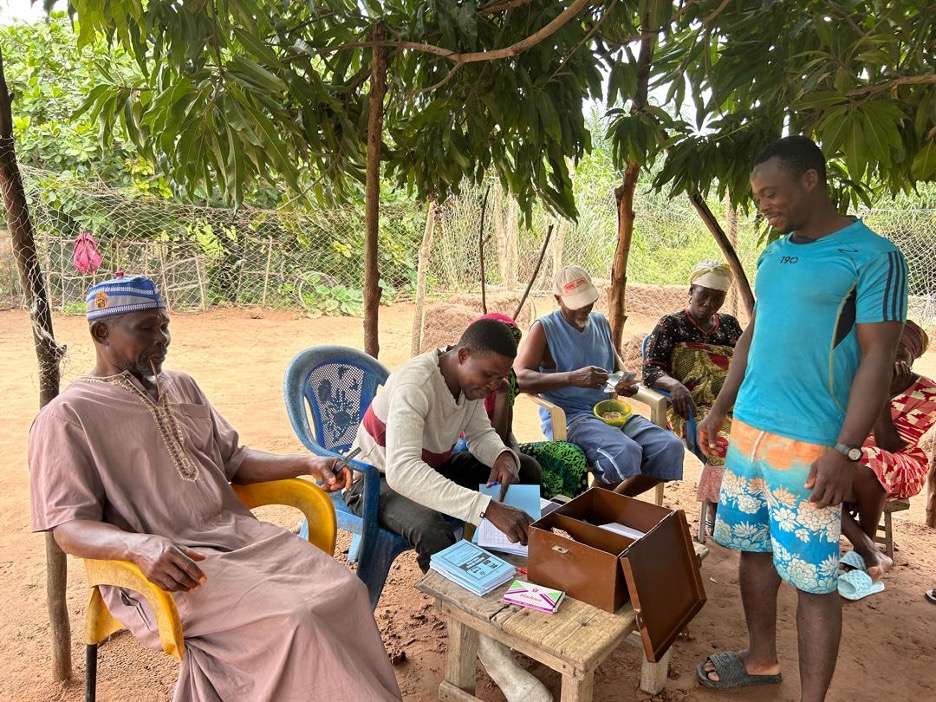
Community leaders at our tree nursery at Donkorkrom
Led by the Ghana National Fire Service, beekeepers have been trained in bush fire prevention and mitigation and last year no beekeeper experienced any fire in their forest-located apiaries – due to their care. In the second year, indigenous forest management is augmented by tree planting. Again, the feedback is positive with beekeepers receiving tree seedlings with enthusiasm.
Issau Amadu said, “I’m excited about the opportunity to plant bee-friendly trees to improve the floral diversity around my hives. Knowing the importance of caring for trees and planting more trees is an eye-opener for many of us. We recognise that honey yield depends on the number of flowering trees here”.
Issau Amadu planting trees near his apiary at Apesika
Our project is making an impact on biodiversity conservation by changing people’s perceptions about vegetation. Instead of viewing woody resources as the primary material for charcoal making, more people are seeing these resources as providing bee forage – and so need to be maintained. Beekeepers’ enthusiasm to protect their hives, bees, and bee forage is driven by their ability to sell honey.
They are trying to conserve biodiversity for the main reason that they can earn money. In the 2024 honey season, beekeepers earned over £15,000 from selling about 13 tons of honeycombs. Some of the beekeepers who brought honey to the Centre, and were paid using Mobile Money, said they had never received so much money before. The priority expenditure for both men and women is children’s school fees.
The social enterprise, established to trade honey, has invested in a marketing strategy that includes a traceability system, brand creation, and a partnership with a honey-packing company. The first consignment of 3.6 tons of honey to leave Donkorkrom marked a real milestone.
“This is a monumental day for me and my community,” said Shafik Asminu, a nature-based beekeeper. “For too long, we have watched our forests disappearing and our environment suffer. Now, we’re not only protecting our natural forest resources but also creating a new source of income for our communities through nature-based beekeeping,” Shafik added.
BfDG Honey and Beeswax Trade Centre, Social enterprise in Donkorkrom, Kwahu Afram Plains
Our Head of MEAL, Papa Kwodwo Mbroh said “This shipment is just the beginning. We aim to expand this initiative. The goal is to create a sustainable and resilient economy in Kwahu Afram Plains, reducing reliance on destructive practices and promoting environmental conservation through nature-based beekeeping. The success of this first truckload demonstrates the potential of beekeeping to transform communities.”
A truck driver who carried the first honey load out of Afram Plains said, “I’m a truck driver and over the years we have been transporting charcoal and other goods to Accra. Today, I have seen there is a new product from Afram Plains, that is honey. I know people cut trees to make charcoal, reducing the forest cover – not a good practise. But I’m happy now we have people who have the knowledge and skills to produce honey from trees. And I’m sure the presence of this organisation [BfDGhana] will make everyone here very happy. I’m happy about the volume of honey produced so far and believe we can produce more for export for the whole world to hear about Ghana with time. I am proud to be the first driver to transport the first 3.6 tons of honey from Afram Plains to Saltpond.”
Loading of a truck with honey at the BfDG Honey and Beeswax Trade Centre in Donkorkrom
From the beginning, this initiative has been driven by the needs and wishes of the local community. They recognised that there was money in honey and asked for support to make this happen. Our approach has been to ‘push at an open door’ and deliver support to communities who wanted to do beekeeping.
Some people were reticent until they saw others making money. The Honey and Beeswax Centre now serves as a catalyst for others and many people come to the centre asking how they can keep bees. It is this tangible link between bees and trees which has made our 2024 treeplanting programme a success.
Other Stories
News
Empowering Beekeepers Through Financial Literacy in the Kwahu Afram Plains
Since 2019, we have been transforming rural livelihoods in the Kwahu Afram Plains through its sustainable beekeeping initiative. Beyond producing honey, this approach empowers communities to restore forests, build income resilience, and improve well-being. Through our hands-on training, participants learn about bee behaviour, hive construction using locally available materials, apiary establishment and management, forest conservation, and […]
Read Story →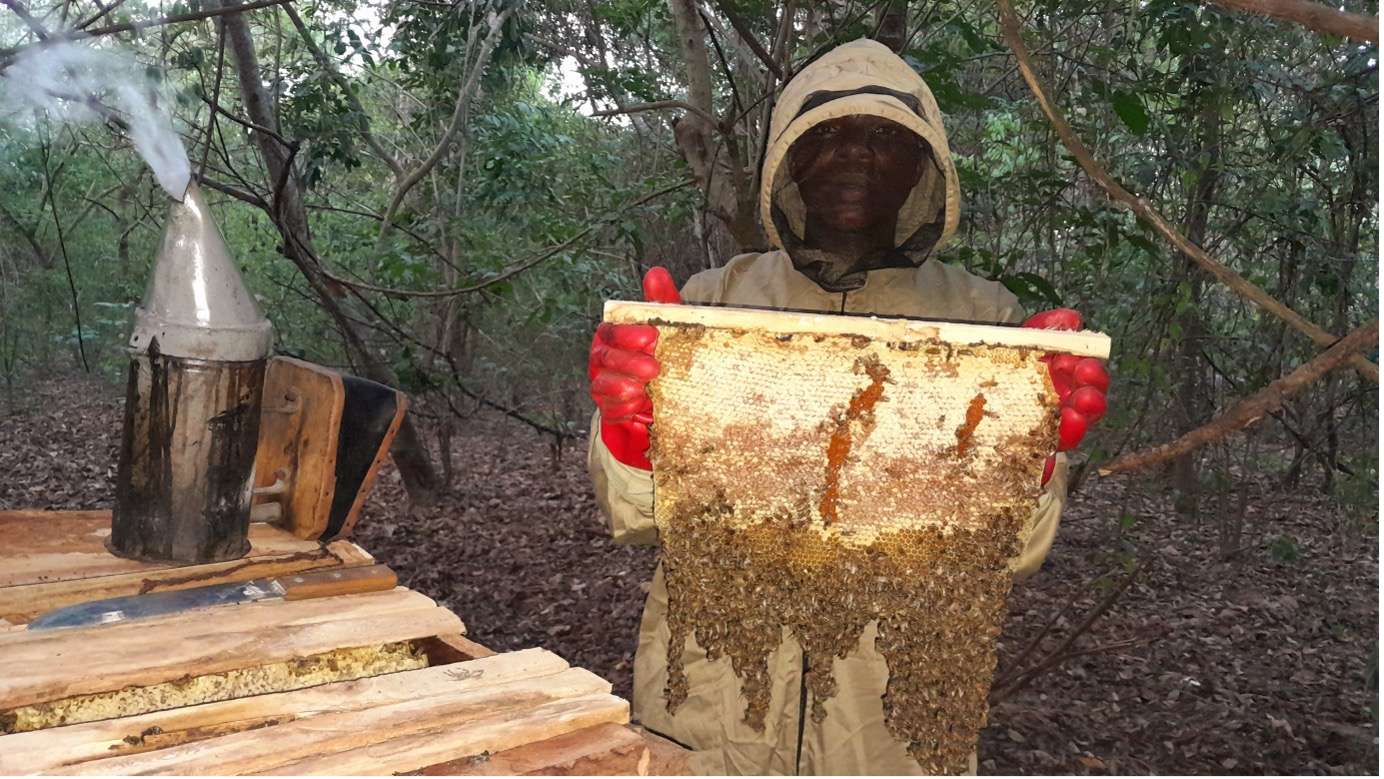
News
Beekeeping Income Inspires Others to Start Beekeeping in Kwahu Afram Plains
In the heart of the Kwahu Afram Plains, a quiet revolution is taking place—one hive at a time. For Felix Agbalenyo, a young resident of Kofinyina near Donkorkrom, the decision to start beekeeping has not only changed his life but is also inspiring others across the area to follow suit. Felix, who earns a living […]
Read Story →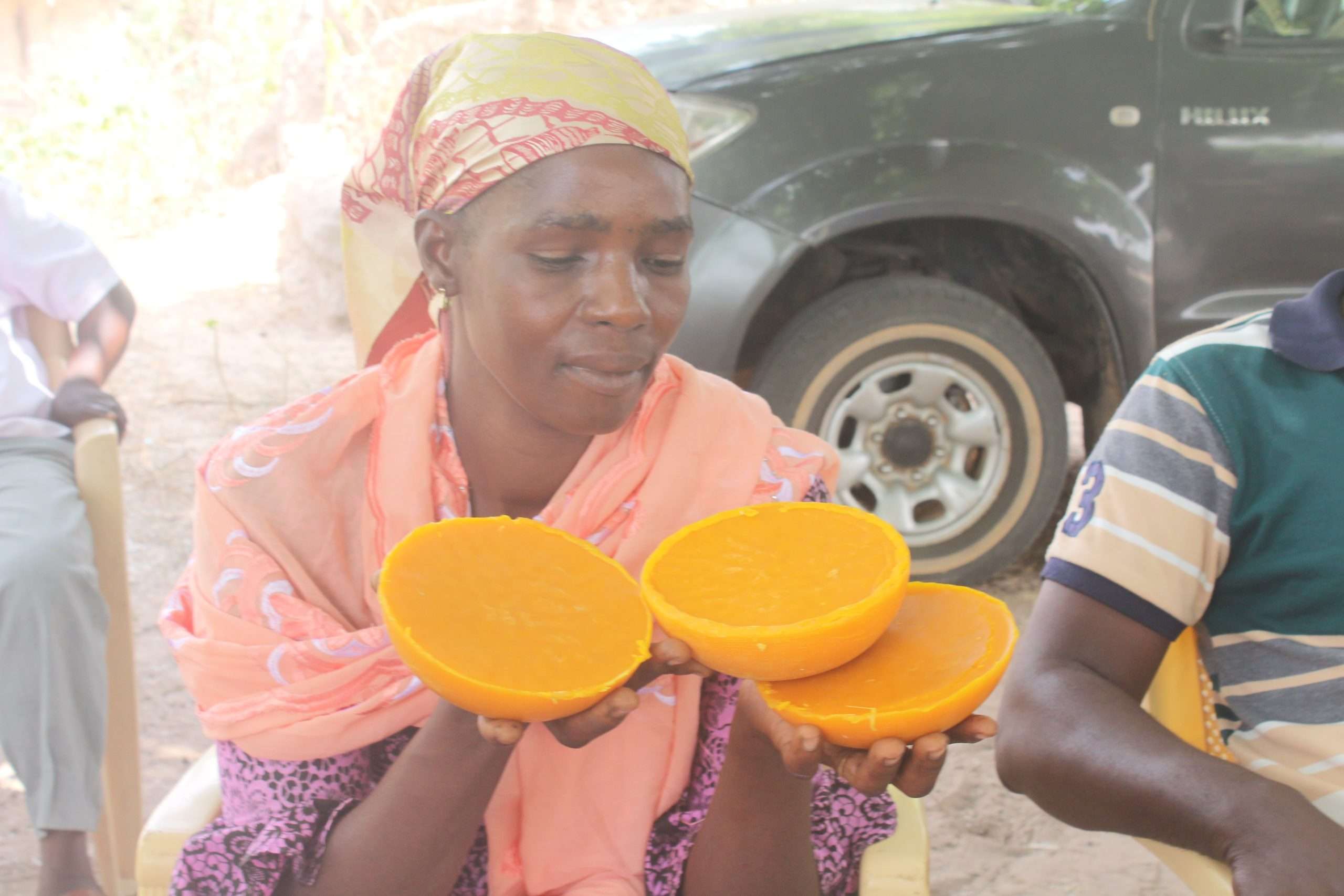
News
Honey hunting to beekeeping: The story of Hawa Ibrahim, the best beekeeper in Kwahu Afram Plains
Hawa Ibrahim, a 52-year beekeeper who used to engage in honey hunting with her husband, lives in a small village [Kojorbator] on the fringe.
Read Story →