Beekeeping: A Pathway to Livelihoods and Forest Restoration in the Afram Plains
In the heart of rural Ghana, beekeeping is quietly transforming lives and landscapes. Once a region where honey hunting was the primary means of accessing this natural treasure, the Kwahu Afram Plains is now experiencing a shift toward more sustainable and economically empowering practices, thanks to the work of Bees for Development Ghana Since 2019, […]
In the heart of rural Ghana, beekeeping is quietly transforming lives and landscapes. Once a region where honey hunting was the primary means of accessing this natural treasure, the Kwahu Afram Plains is now experiencing a shift toward more sustainable and economically empowering practices, thanks to the work of Bees for Development Ghana
Since 2019, BfD Ghana has been promoting sustainable beekeeping in the region. The response from local communities has been inspiring, with many rural households adopting beekeeping as a viable livelihood and forest conservation strategy.
In 2024, BfD Ghana launched the “Beekeepers Restore the Forests of Afram Plains” Project, funded by the Darwin Initiative of the UK Government. This project aims to improve rural livelihoods while restoring degraded forests through sustainable, bee-centred approaches.
One of the most remarkable stories to emerge from the project is that of Mr. Adamu Mumuni and his son, Inusah Mumuni, residents of a small hamlet called Fulani, near the Bature community.
Mr Adamu Mumuni is observing how to construct a Borassus hive at the BRF beekeeping workshop at Bature
Mr. Mumuni began his beekeeping journey with 20 hives, gradually adding more over time. However, he faced several challenges—constructing efficient hives, managing apiaries, controlling pests, and harvesting and processing honey. His hives were scattered throughout the forest, often one per apiary, making effective management difficult.
Despite these setbacks, his determination never wavered. He managed to harvest and sell one gallon of honey at the Donkorkrom market. Unfortunately, the return was disappointing. “I felt cheated,” he admitted, referring to the low price he received for his honey.
Everything changed after attending a BfD Ghana beekeeping training workshop in Bature, where he and Inusah acquired advanced knowledge and skills in sustainable beekeeping.
A follow-up extension visit by a BfD field officer revealed the impressive effort he had invested. Mr. Mumuni is now managing 64 beehives, with 40 active colonies. His son, Inusah, has taken on 7 hives of his own, all with thriving colonies.
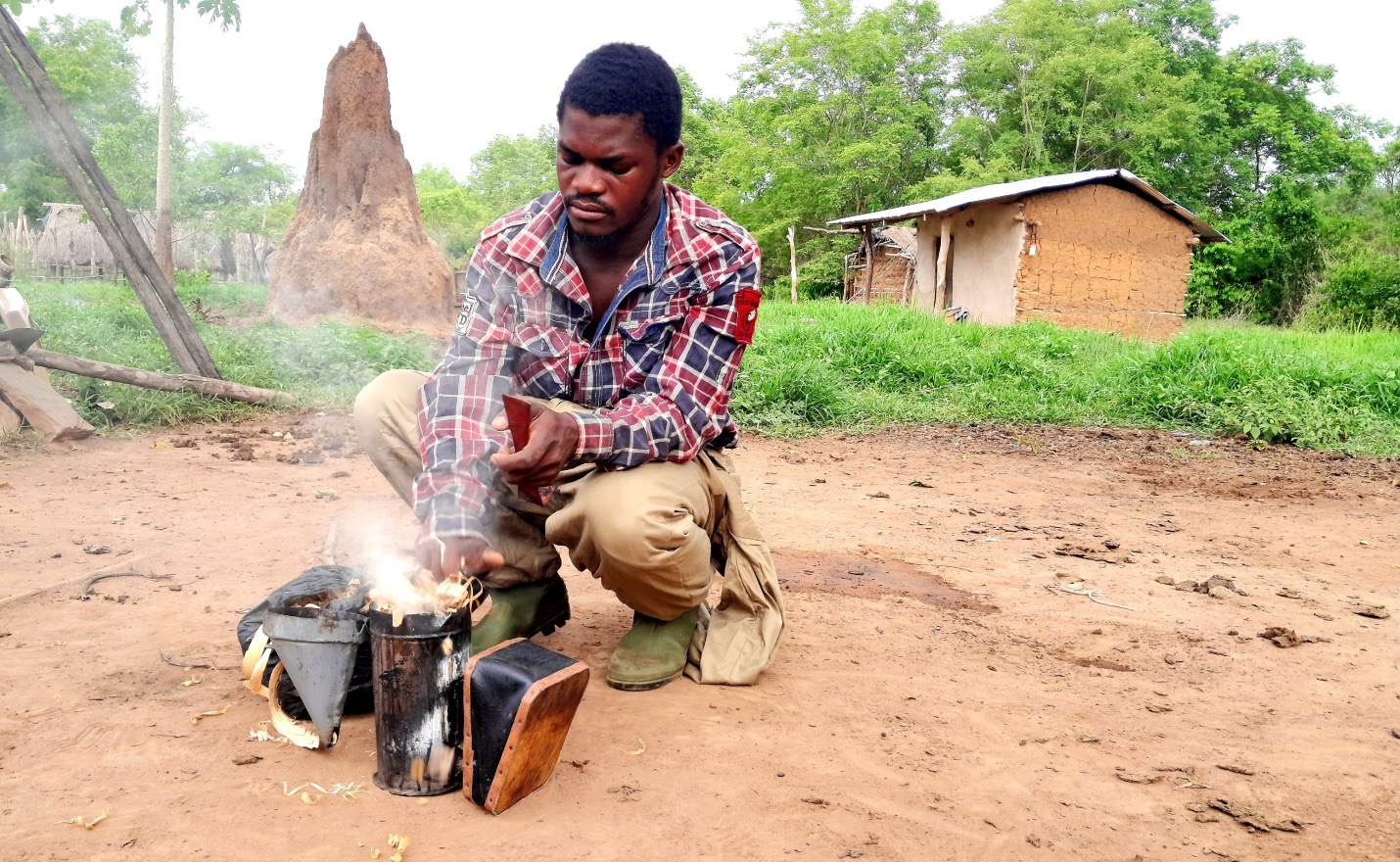
Inusah Mumuni is lighting a smoker at Fulani, Bature
The father-son duo now sees beekeeping as a time-efficient, reliable source of income. In 2024, they sold honey worth GHS 3,000.00 to the BfD Ghana Honey and Beeswax Trade Centre in Donkorkrom. With part of this income, Mr. Mumuni built more hives and used the rest to support his family’s essential needs.
In an interview with a BfD field officer, the pair shared their plans:
“We are planning to build more beehives and produce enough honey for more income. We encourage others to keep bees because beekeeping is very easy and is a reliable source of income.”
Inusah is smoking a beehive at Fulani, Bature
Beyond the income, beekeeping is helping protect the local forest. Unlike traditional honey hunting—which often destroys hives and disturbs ecosystems—sustainable beekeeping encourages habitat conservation. Communities now recognise the value of maintaining trees and forest cover to support bee forage.
Inusah is with the BfD Ghana field officer inspecting a colony at Fulani, Bature
The story of the Mumunis is one of many emerging from the Afram Plains—stories of resilience, adaptation, and progress. Through its continued work, Bees for Development Ghana is not only supporting livelihoods but also helping rural communities become stewards of their natural environment.
Thanks to Bees for Development Ghana, beekeeping in Ghana is no longer just about honey—it’s about hope, restoration, and empowerment.
Inusah with a honeycomb at his apiary in Fulani, Bature
Other Stories
News
Empowering Beekeepers Through Financial Literacy in the Kwahu Afram Plains
Since 2019, we have been transforming rural livelihoods in the Kwahu Afram Plains through its sustainable beekeeping initiative. Beyond producing honey, this approach empowers communities to restore forests, build income resilience, and improve well-being. Through our hands-on training, participants learn about bee behaviour, hive construction using locally available materials, apiary establishment and management, forest conservation, and […]
Read Story →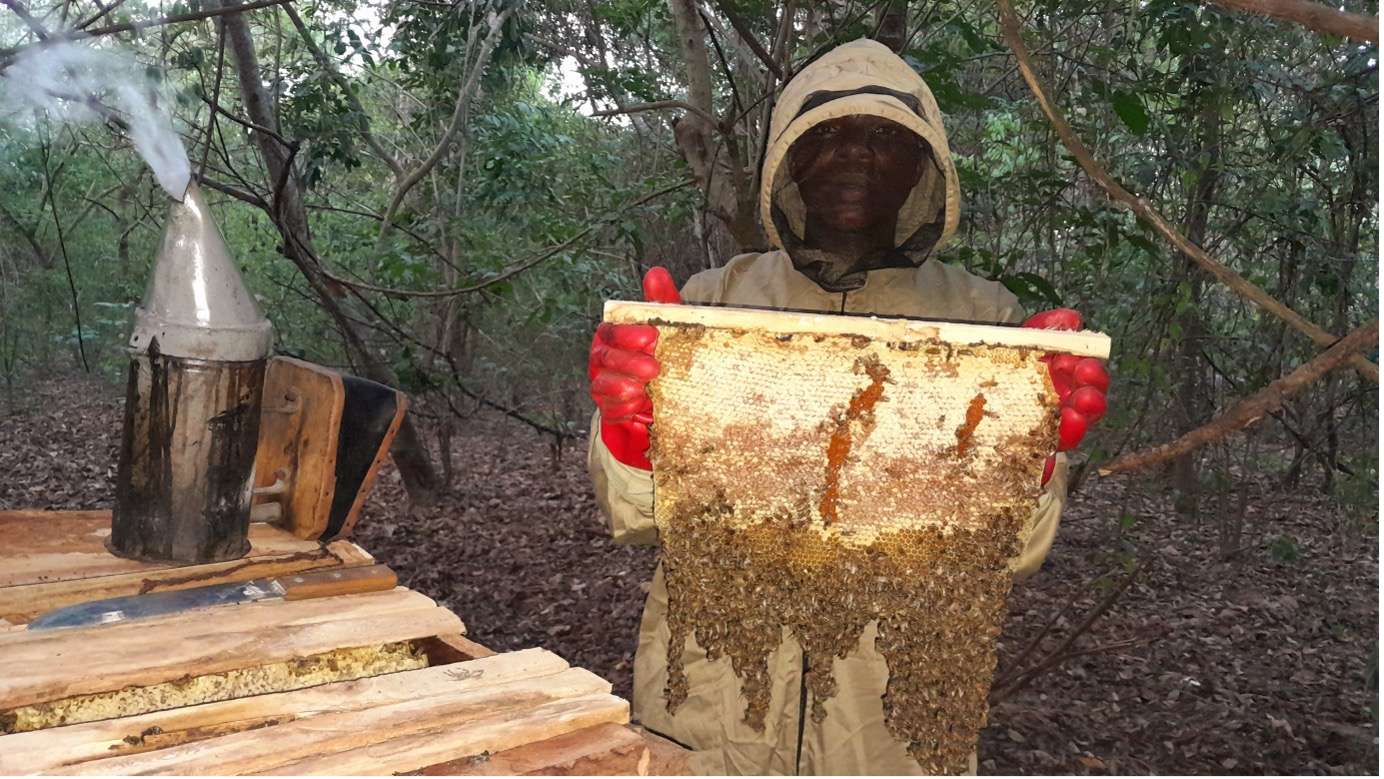
News
Beekeeping Income Inspires Others to Start Beekeeping in Kwahu Afram Plains
In the heart of the Kwahu Afram Plains, a quiet revolution is taking place—one hive at a time. For Felix Agbalenyo, a young resident of Kofinyina near Donkorkrom, the decision to start beekeeping has not only changed his life but is also inspiring others across the area to follow suit. Felix, who earns a living […]
Read Story →
News
Honey hunting to beekeeping: The story of Hawa Ibrahim, the best beekeeper in Kwahu Afram Plains
Hawa Ibrahim, a 52-year beekeeper who used to engage in honey hunting with her husband, lives in a small village [Kojorbator] on the fringe.
Read Story →