Protecting Forests with Bees: The Inspiring Story of Abdul Rahman Yakubu
A former manager of the Forestry Commission in Donkorkrom and a proud resident of Bondaso in the Kwahu Afram Plains, Mr. Abdul Rahman Yakubu has turned his passion for nature into action. Troubled by the widespread destruction of trees for charcoal production in his community, he sought a nature-based solution that would both conserve the […]
A former manager of the Forestry Commission in Donkorkrom and a proud resident of Bondaso in the Kwahu Afram Plains, Mr. Abdul Rahman Yakubu has turned his passion for nature into action.
Troubled by the widespread destruction of trees for charcoal production in his community, he sought a nature-based solution that would both conserve the forest and benefit the local people. His answer: beekeeping.
In 2009, determined to protect the forest near his home, Mr. Yakubu installed a few beehives on his land. He even placed one next to a treasured Papao tree (Afzelia africana) to discourage its felling. His idea was simple yet powerful—bees protect trees.
His efforts paid off. Not only did he successfully conserve his portion of the forest, but he also began earning income from the honey harvested.
Encouraged by this dual success, Mr. Yakubu began advocating for beekeeping in Bondaso. At first, his message fell on deaf ears. But things changed when he liaised with Mr. Gideon Hopeson Zege, the Beekeeping Outreach and Training Manager of Bees for Development Ghana (BfD Ghana). With Mr. Zege’s dedicated support, interest in beekeeping grew among community members.
Mr Abdul Rahman Yakubu’s Borasuss beehives protected from bushfire at Bondaso.
Despite these strides, Mr. Yakubu faced challenges marketing his honey. Prices were low and inconsistent, making the venture economically unstable. In fact, there is no fair price for his honey.
His struggles changed when BfD Ghana established the Honey and Beeswax Trade Centre in Donkorkrom, with support from Bees for Development UK and the Darwin Initiative of the UK Government. Motivated by this development, Mr. Yakubu sold 201.8 kg of honeycombs to the Centre in 2024 and earned GH₵5,045.00.
In 2025, the beekeeping season was harshly impacted by climate change and devastating bushfires. Still, Mr. Yakubu sold 138.5 kg of honeycombs, earning GH₵4,155.00 in June.
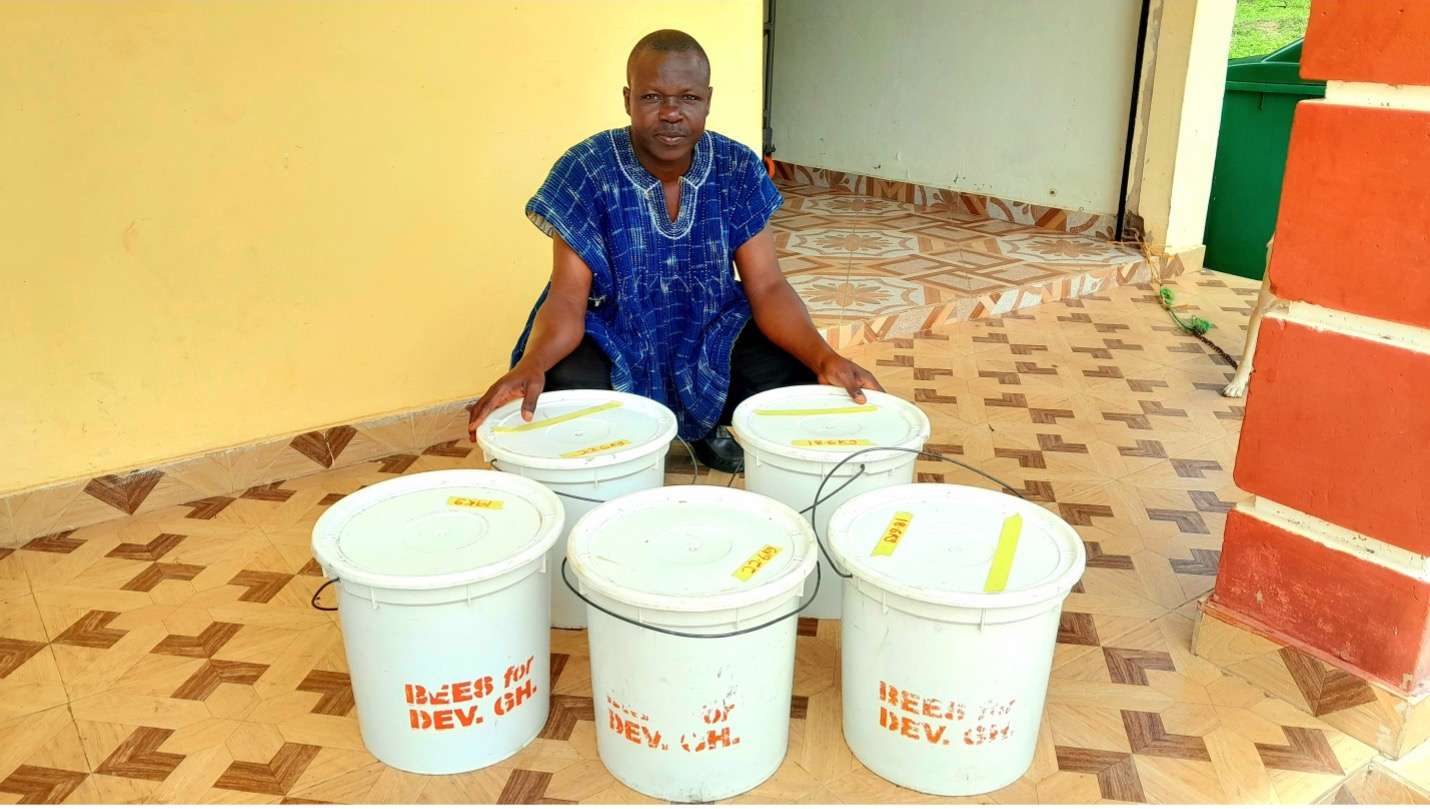
Mr Abdul Rahman Yakubu with his buckets of honeycombs to sell at BfDG Honey and Beeswax Trade Centre
What sets Mr. Yakubu apart is his unwavering dedication to the work. Even when he is away from Donkorkrom, he ensures his apiary is cared for by hiring a labourer. When bushfires ravaged nearby forests, destroying farms and beehives, his hives remained untouched, protected by a fire belt he had created around his apiary—a testament to his careful management.
Looking to the future, Mr. Yakubu remains motivated by the income from honey and the improved health of the forest where his bees thrive. He plans to plant Mahogany (Swietenia mahagoni) and Papao (Afzelia africana) seedlings to further enrich the forest and boost nectar sources for his bees.
Mr Yakubu said, ‘I will plant some Mahogany (Swietenia mahagoni) and Papao seedlings (Afzelia Africana) in the area to enrich the vegetation and also to increase my honey yield, as the bees would feed on the nectar.’
Today, Mr. Abdul Rahman Yakubu is more than a beekeeper—he is a conservation champion and community advocate. His story demonstrates how beekeeping, when done sustainably, can protect forests, support livelihoods, and inspire collective action for nature.
The Darwin Initiative of the UK government supported the completion of the BfDG Honey and Beeswax Trade Centre, started by Bees for Development, UK.
Other Stories
News
Empowering Beekeepers Through Financial Literacy in the Kwahu Afram Plains
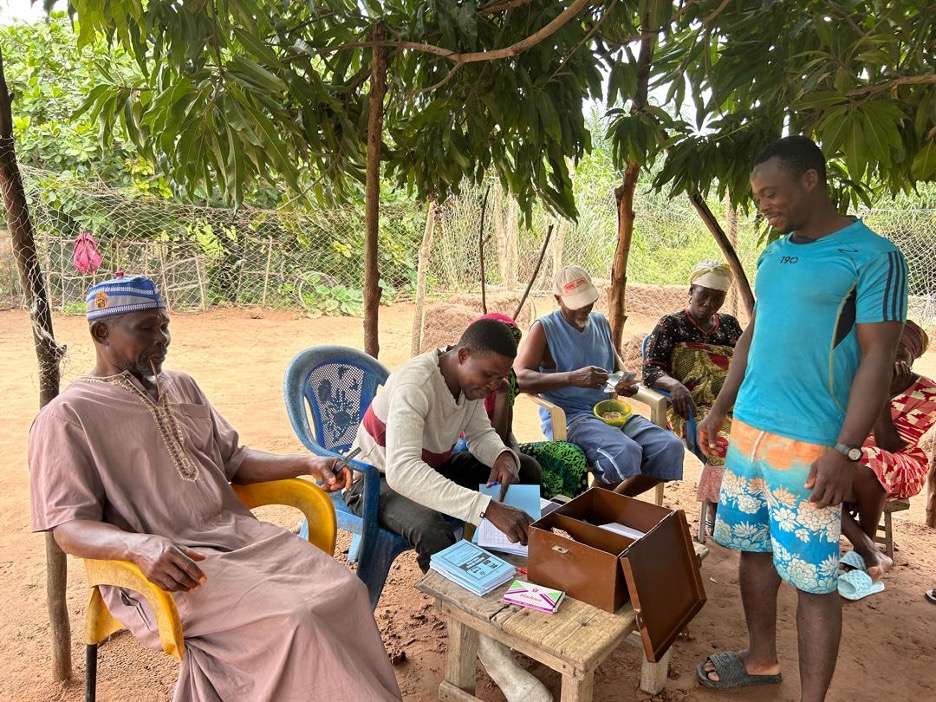
Since 2019, we have been transforming rural livelihoods in the Kwahu Afram Plains through its sustainable beekeeping initiative. Beyond producing honey, this approach empowers communities to restore forests, build income resilience, and improve well-being. Through our hands-on training, participants learn about bee behaviour, hive construction using locally available materials, apiary establishment and management, forest conservation, and […]
Read Story →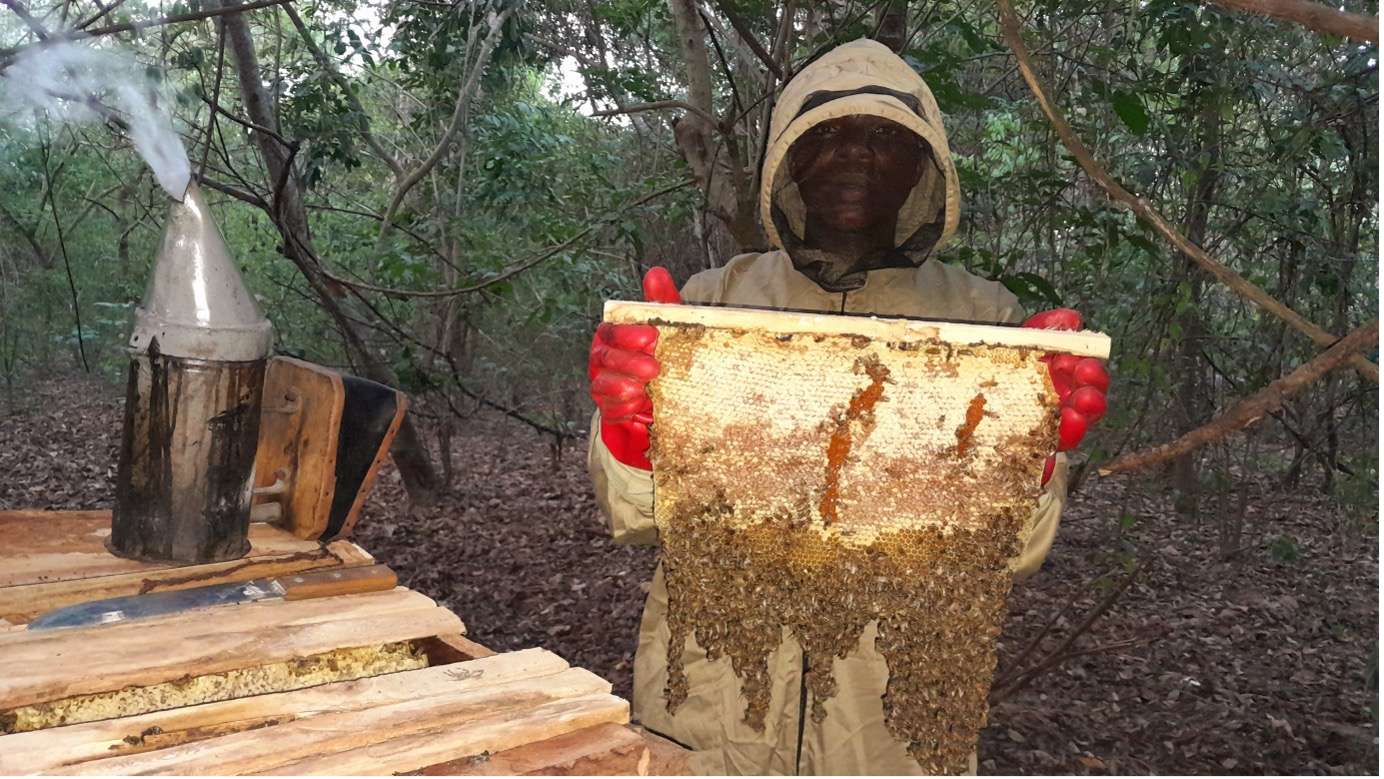
News
Beekeeping Income Inspires Others to Start Beekeeping in Kwahu Afram Plains
In the heart of the Kwahu Afram Plains, a quiet revolution is taking place—one hive at a time. For Felix Agbalenyo, a young resident of Kofinyina near Donkorkrom, the decision to start beekeeping has not only changed his life but is also inspiring others across the area to follow suit. Felix, who earns a living […]
Read Story →
News
Honey hunting to beekeeping: The story of Hawa Ibrahim, the best beekeeper in Kwahu Afram Plains
Hawa Ibrahim, a 52-year beekeeper who used to engage in honey hunting with her husband, lives in a small village [Kojorbator] on the fringe.
Read Story →