Young Beekeepers in the Making: How Two 14-Year-Olds Are Turning Curiosity into Opportunity
In the heart of Kwahu Afram Plains North District, Ghana, two 14-year-old boys—Godfred Anomaa and Obed Anokye, both Basic 9 pupils of Atakora D/A Basic School—are quietly building a future powered by bees. While they may be young, their ambition and drive are anything but inspiring. Their beekeeping journey began not with membership in a […]
In the heart of Kwahu Afram Plains North District, Ghana, two 14-year-old boys—Godfred Anomaa and Obed Anokye, both Basic 9 pupils of Atakora D/A Basic School—are quietly building a future powered by bees.
While they may be young, their ambition and drive are anything but inspiring. Their beekeeping journey began not with membership in a club or formal training but with curiosity, community influence, and sheer determination.
Atakora D/A Basic School is one of six schools where Bees for Development Ghana (BfD Ghana) has introduced Buzz Clubs—student-led beekeeping clubs that promote pollination, biodiversity, and sustainable income generation.
Although Godfred and Obed are not official members of the club, Godfred occasionally joins their sessions to learn more about bees. He was also inspired by his mother, Mary Anomaa, a passionate caregiver and beekeeper trained by BfD Ghana in 2023.
“My mother encouraged me to start beekeeping because I could make money to support myself,” Godfred shared. “She convinced my father to buy us beehives. Now, she manages four hives with three colonies, and I often join her at the apiary.”
Obed didn’t attend the Buzz Club’s teaching sessions, but he learned from the members—and especially from Godfred. “We learned from the Club that bees are our friends and we should not kill them,” he said.
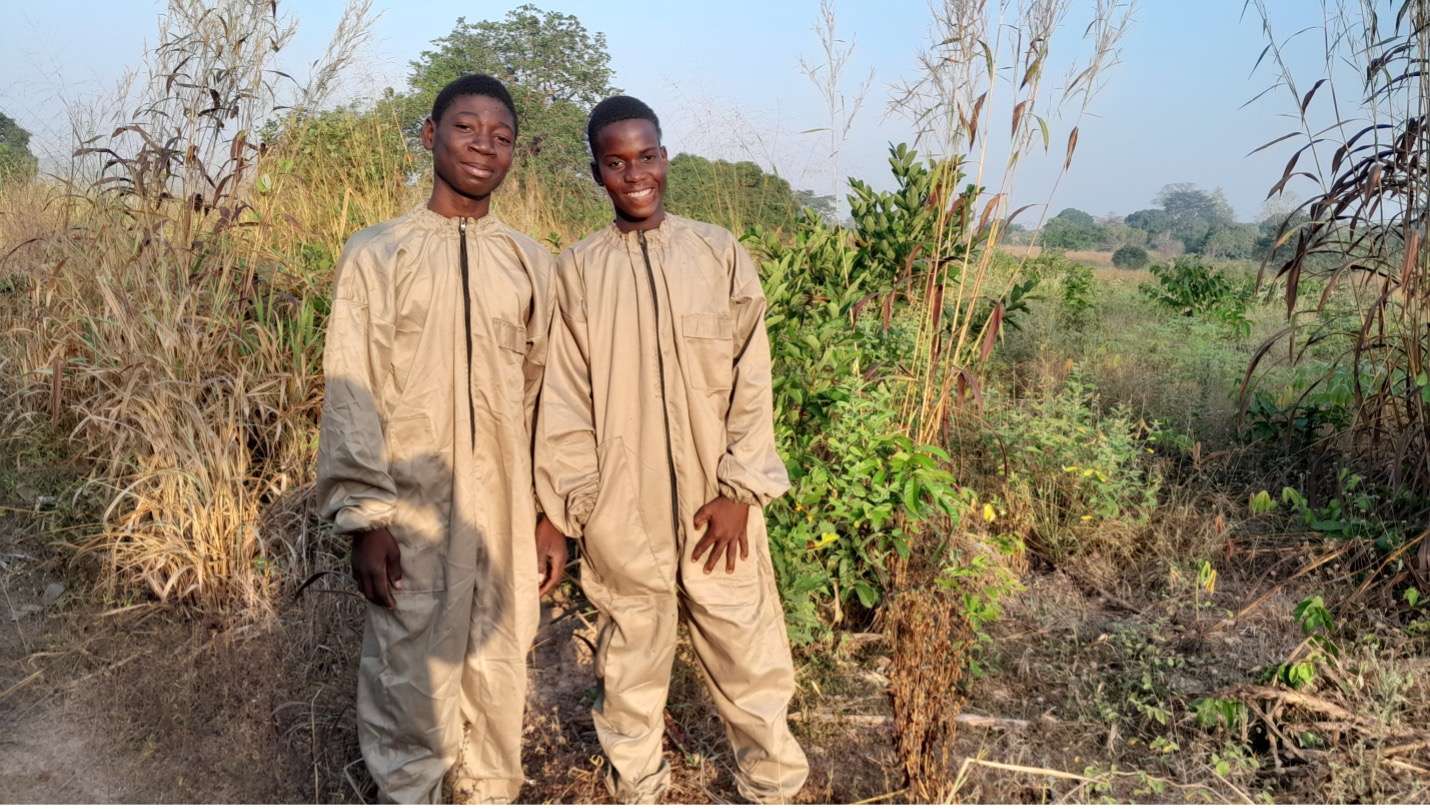
From left: Godfred Anomaa, Mary Anomaa and Obed Anokye
Motivated by what they learned, the two boys decided to take action. With guidance and support from their families, they set up an apiary on a cashew farm, knowing the trees produce lots of flowers that bees love.
Godfred received a top bar beehive from his father, while Obed found a broken hive abandoned in the bush. After seeking permission from the owner, the boys repaired the hive together and installed it near Godfred’s.
Today, they each manage a bee colony, maintaining their apiary with care and responsibility. Before a recent inspection by a BfD Ghana field officer, they cleared the weeds around the hives—demonstrating real dedication to their new role as young beekeepers.
Mary and Godfred working in their apiary
During the inspection, Godfred wore a bee suit for the first time. “I felt very excited,” he said. “I had never seen the bees working inside the hive before. Now that I’ve started beekeeping, I will learn more and earn income from the bees making honey. I will use the money to cater for myself.”
Obed’s journey hasn’t been without obstacles. “When I told my mother I wanted to keep bees, she said I should stop because I wouldn’t gain anything,” he explained. “But I respectfully refused. Now I’m keeping bees, and I believe it will help me financially. I’ll use the money to further my education after basic school.”
Godfred is smoking around a bee colony for inspection
Despite their age, Godfred and Obed have big plans. They hope to expand their apiary with more hives and colonies—not just to make money, but to deepen their knowledge about bees, protect the environment, and become self-reliant young entrepreneurs.
Their story is a powerful reminder that with the right knowledge, inspiration, and support, young people can become change-makers—not only for themselves but for their communities and the environment.
Obed Anokye and Godfred Anomaa pose for a photo close their apiary
The Buzz is Just Beginning
Thanks to the work of Bees for Development Ghana and the support of passionate individuals like Mary Anomaa and local teachers, a quiet transformation is taking root in the Afram Plains—one hive at a time.
Godfred and Obed represent the future of sustainable development in rural Ghana: resilient, resourceful, and buzzing with potential.
Other Stories
News
Empowering Beekeepers Through Financial Literacy in the Kwahu Afram Plains
Since 2019, we have been transforming rural livelihoods in the Kwahu Afram Plains through its sustainable beekeeping initiative. Beyond producing honey, this approach empowers communities to restore forests, build income resilience, and improve well-being. Through our hands-on training, participants learn about bee behaviour, hive construction using locally available materials, apiary establishment and management, forest conservation, and […]
Read Story →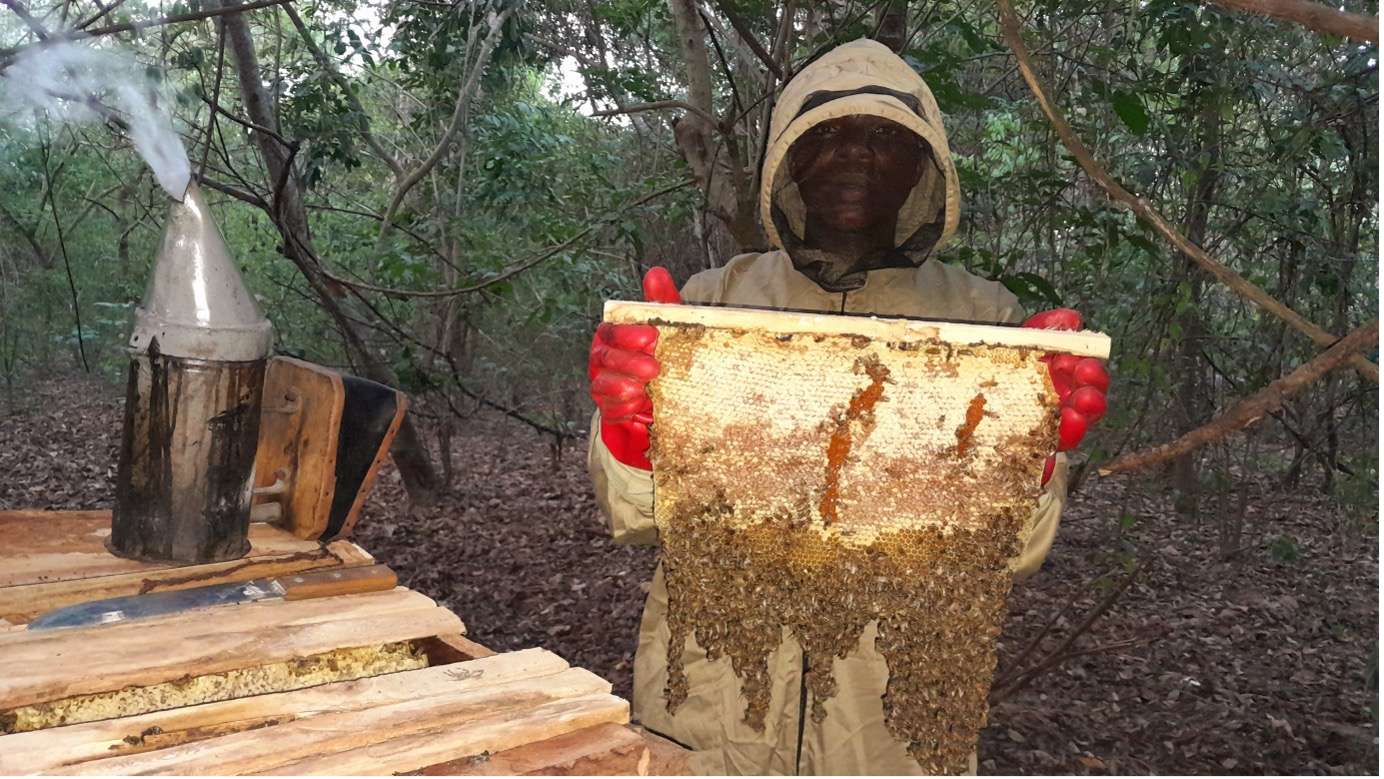
News
Beekeeping Income Inspires Others to Start Beekeeping in Kwahu Afram Plains
In the heart of the Kwahu Afram Plains, a quiet revolution is taking place—one hive at a time. For Felix Agbalenyo, a young resident of Kofinyina near Donkorkrom, the decision to start beekeeping has not only changed his life but is also inspiring others across the area to follow suit. Felix, who earns a living […]
Read Story →
News
Honey hunting to beekeeping: The story of Hawa Ibrahim, the best beekeeper in Kwahu Afram Plains
Hawa Ibrahim, a 52-year beekeeper who used to engage in honey hunting with her husband, lives in a small village [Kojorbator] on the fringe.
Read Story →